The topological qubit represents a groundbreaking advancement in the field of quantum computing, heralding a new era of stability and performance for quantum computers. Developed by Microsoft, this innovative qubit is poised to outperform traditional quantum qubits, which have often struggled with reliability due to environmental interferences. With its unique properties, the topological qubit promises to facilitate the creation of ultrafast quantum computers capable of tackling complex computational problems far more efficiently than current supercomputing technology. Pioneering research led by Chetan Nayak and his team illustrates the potential of topological materials, integrating superconducting materials in a way that enhances qubit performance and error resilience. As Microsoft continues to push the envelope with qubit technology, the implications for industries reliant on advanced computational power grow exponentially, positioning topological qubits at the forefront of quantum innovation.
The newly developed geometric quantum bit, known as the topological qubit, stands at the cutting edge of advances in quantum computation technology. Unlike standard quantum bits, which face challenges related to stability and error rates, this innovative geometric qubit offers a more robust framework for building quantum systems. Microsoft, under the direction of notable researchers such as Chetan Nayak, aims to leverage this technology to create highly efficient ultrafast quantum computers. By harnessing the unique characteristics of superconducting materials and quantum mechanics principles, topological qubits could revolutionize the way we approach complex problem-solving in the quantum realm. As we delve deeper into these advanced qubit architectures, the quest for a million-qubit quantum computer comes closer to realization.
Introduction to Topological Qubits in Quantum Computing
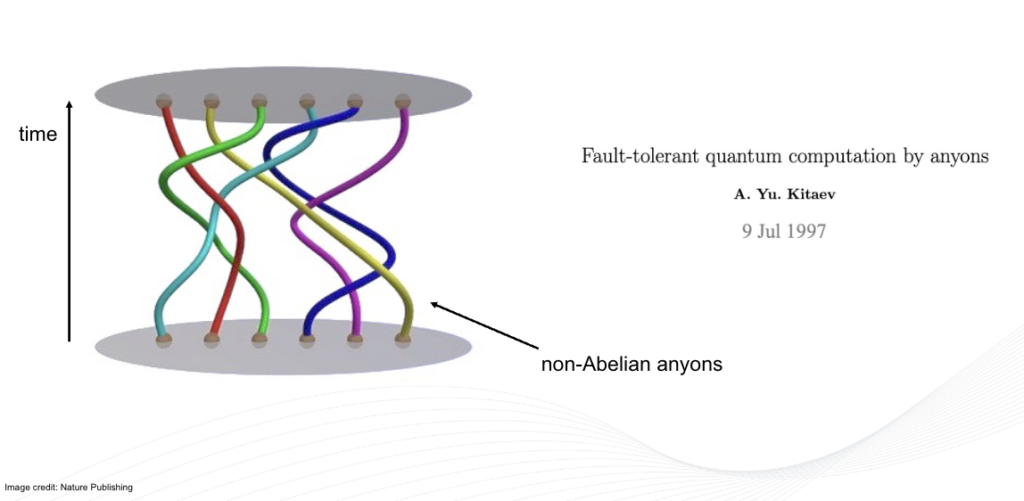
Topological qubits represent a groundbreaking advancement in the realm of quantum computing, addressing some of the critical challenges faced by conventional quantum bits, or qubits. Unlike traditional qubits that can easily lose their quantum states due to environmental disturbances, topological qubits offer enhanced stability. This stability could significantly enhance the reliability and performance of quantum computers. Researchers, including a prominent team at Microsoft led by Chetan Nayak, have been at the forefront of this quantum research, employing superconducting materials combined with innovative techniques to create these robust qubits.
The concept of topological qubits is rooted in complex mathematical structures that offer a unique approach to error correction, essential for practical quantum computing. By leveraging the properties of materials like indium arsenide and aluminum, which become superconductive at very low temperatures, these qubits can maintain their quantum states longer, reducing the risk of errors. This innovation aligns with Microsoft’s long-term vision of developing ultrafast quantum computers that can outperform classical supercomputers in solving intricate problems, ranging from advanced materials discovery to solving complex computational tasks.
The Role of Quantum Mechanics in Computing
Quantum mechanics plays a pivotal role in the functioning of topological qubits and quantum computers in general. At the core of quantum computing lies the principle of superposition, which allows particles to exist in multiple states at once. This characteristic fundamentally transforms the way information is processed compared to classical computing, where bits can only be in one state at a time. By harnessing these quantum mechanics phenomena, ultrafast quantum computers can perform computations at an unprecedented scale, thus addressing some of the most computationally intensive challenges faced by today’s technology.
Moreover, the potential of quantum computing extends beyond merely processing speeds; it can deeply influence various fields, including artificial intelligence, cryptography, and materials science. The contributions of researchers like Chetan Nayak emphasize the importance of understanding and applying quantum mechanics for future computing technologies. Microsoft’s research into topological qubits exemplifies this application, as they seek to unlock advanced capabilities that can simulate quantum phenomena more effectively than classical approaches, thereby driving breakthroughs in technology and knowledge.
Transforming Fundamental Physics into Practical Solutions
The development of topological qubits is more than just theoretical progress; it represents a tangible shift towards practical applications in quantum computing. By recognizing that the right materials can create a stable state of quantum matter, researchers can effectively translate fundamental physics into viable technological solutions for real-world problems. Chetan Nayak’s work at Microsoft is a testament to this transition, emphasizing the importance of material science and engineering in the quest to build more powerful quantum computers.
The implications of successfully harnessing topological qubits extend across various sectors. From revolutionizing drug discovery through efficient chemical simulations to tackling complex problems in optimization and machine learning, the scope is vast. The ambitious goal of constructing a million-qubit quantum computer hinges on these advancements, ultimately reshaping our understanding and manipulation of matter at the quantum level. As Nayak aims to bridge the gap between physics and technology, he reinforces the notion that exploring the properties and behaviors of materials can lead to revolutionary advancements in computing.
Challenges in Quantum Research and Development
While the prospects for topological qubits and ultrafast quantum computers are exciting, the journey is fraught with challenges. The complexity of combining superconducting materials with precise engineering to create stable quantum states is substantial. Nayak and his team have invested nearly two decades in research, continually overcoming obstacles that could impede progress. The multifaceted nature of quantum mechanics requires diverse expertise, from theoretical physics to material science, making collaboration essential in this field.
Moreover, skepticism is a natural part of the scientific process, especially in new and groundbreaking fields like quantum computing. Some experts may question the validity of the results, prompting researchers to share their findings transparently within the scientific community. By engaging with audiences, addressing concerns, and elucidating their discoveries at conferences, researchers like Nayak contribute to demystifying quantum computing. This engagement is crucial not only for gaining broader acceptance but also for encouraging future investments in this pivotal technology.
Future Prospects: A Million-Qubit Quantum Computer
Looking ahead, the vision of a million-qubit quantum computer is a formidable yet achievable ambition. Microsoft, alongside its research teams, derived a roadmap focused on scaling up quantum technology without compromising on quality or functionality. The importance of reaching this scale is underscored by the potential to solve intricate problems that are currently insurmountable for classical computers. The gradual progress of creating robust qubit systems and enhancing their stability exemplifies the incremental advancements needed to realize such a quantum computing behemoth.
Achieving this goal not only emphasizes the technical aspects of quantum computing but also reflects the broader implications for fields like artificial intelligence, cryptography, and even climate modeling. The intricate challenges of simulating complex materials or processes can benefit greatly from advancements in topological qubit technology. As researchers continue to refine their strategies and foster innovation, the dream of accessing the extraordinary computational power of a million-qubit quantum computer may soon transform from a bold vision into a tangible reality.
Collaborative Efforts in Quantum Computing
Collaboration is key in the realm of quantum computing, where interdisciplinary approaches are vital for overcoming the inherent challenges of quantum mechanics. Research institutions, corporations, and academic circles, such as those in Santa Barbara where Chetan Nayak conducts his work, engage in joint ventures to share knowledge and resources. By pooling together expertise from various fields, researchers can explore diverse methodologies for developing more effective quantum systems, including the innovation of topological qubits.
This teamwork not only accelerates technological advancements but also advances collective understanding of quantum phenomena. As organizations like Microsoft partner with agencies like DARPA, they forge pathways for future breakthroughs that could redefine computing. Sharing findings and insights across the scientific community strengthens the integrity of research efforts, fostering an environment where skepticism transforms into constructive inquiry, thereby enhancing the overall progress in quantum computing.
Educational Initiatives Focused on Quantum Technologies
As the field of quantum computing grows, so too does the need for educational initiatives that prepare the next generation of scientists and engineers. Programs aimed at illuminating the complexities of quantum mechanics and its applications in technology are increasingly vital. Universities, such as Harvard, where Nayak once studied, are adapting their curricula to include advanced quantum concepts, introducing students to the essential principles governing quantum systems and the emerging technologies based on these principles.
These educational efforts are crucial not only for developing expertise in quantum computing but also for fostering a culture of innovation and curiosity. By equipping students with a foundational understanding of quantum mechanics and its relevance to modern computational challenges, institutions can cultivate a workforce adept at tackling the intricacies of future technologies. As we move toward a reality filled with ultrafast quantum computers powered by stable topological qubits, the importance of education in this field cannot be overstated.
The Impact of Quantum Computing on Industry Applications
The impact of quantum computing pervades diverse industries, from finance and pharmaceuticals to logistics and artificial intelligence. With the advent of topological qubits, organizations can leverage higher computational capabilities to optimize operations, enhance predictive analytics, and ensure data security through quantum encryption techniques. The unique characteristics of quantum systems allow companies to tackle complex problems that were previously deemed unsolvable, thus offering a competitive edge in a rapidly evolving market.
For instance, in the pharmaceutical industry, quantum computing has the potential to revolutionize drug discovery by accurately simulating molecular interactions and predicting chemical reactions. By utilizing the advantages of ultrafast quantum computers, companies can significantly accelerate the development of new drugs, leading to enhanced therapies and quicker responses to emerging health concerns. This paradigm shift represents just one of the vast applications expected from advancements in quantum technologies driven by topological qubits.
Conclusion: Embracing Quantum Era and Its Challenges
As we stand on the brink of a new quantum era propelled by innovations like topological qubits, it is essential to embrace the challenges and opportunities this technology presents. Researchers like Chetan Nayak illuminate the potential that lies in understanding and controlling quantum states, pushing the boundaries of what’s possible in computing. The journey toward realizing a million-qubit quantum computer is a testament to the dedication and ingenuity of scientists committed to reinventing our approach to complex problems.
The collaborative nature of this research, combined with a focus on education and industry applications, is crucial for driving forward the next wave of technological advancement. Embracing quantum computing not only reshapes how we process information but also redefines our understanding of nature at its most fundamental level. As we navigate the intricacies of this transformative technology, the implications for society and scientific progress will undoubtedly be profound.
Frequently Asked Questions
What are topological qubits and how do they enhance quantum computing?
Topological qubits are a novel type of qubit developed by Microsoft that utilize unique physical properties to provide greater stability and robustness than traditional qubits. They are designed to survive environmental disturbances, reducing the risk of losing quantum information, thereby enhancing the reliability of quantum computers.
How do topological qubits differ from superconducting materials used in quantum computing?
While superconducting materials serve as a basis for many current qubit designs, topological qubits offer a distinct advantage by leveraging their topological properties. This means they can maintain quantum states longer and are less susceptible to errors caused by environmental noise, paving the way for more reliable ultrafast quantum computers.
What role does Chetan Nayak play in the development of topological qubits?
Chetan Nayak is a leading researcher and Technical Fellow at Microsoft, overseeing the advancement of topological qubit technology. His nearly two decades of research in the field is crucial for paving the way towards creating scalable quantum computers that can outperform classical systems.
Can the topological qubit technology lead to ultrafast quantum computers?
Yes, Microsoft believes that topological qubit technology has the potential to significantly accelerate the development of ultrafast quantum computers that can tackle complex problems much faster than traditional supercomputers, thanks to their stable quantum states.
What are the key advantages of using topological qubits in quantum computing?
Topological qubits offer several advantages, including enhanced stability against errors, reduced susceptibility to environmental interference, and the potential for easier control with fewer signals, all of which contribute to more efficient and powerful quantum computing systems.
How does quantum error correction play a role in the function of topological qubits?
Quantum error correction is essential in supporting topological qubits by managing the inherent fragility of quantum systems. By improving hardware-level error resilience, topological qubits aim to minimize qubit decoherence and maintain reliable quantum computations.
What is the future outlook for topological qubits in quantum computing?
The future for topological qubits looks promising, with ambitions to develop million-qubit quantum computers that can solve real-world problems in materials science, chemistry, and beyond. Researchers are actively working on scaling this technology while demonstrating fault tolerance and advanced capabilities.
What were the initial challenges faced in developing topological qubits?
Early challenges included identifying the right materials that combine the beneficial properties of superconductors and semiconductors. Researchers also had to overcome the complex nature of simulating these topological states and the processes necessary for their practical application.
What specific materials are used in creating Microsoft’s topological qubits?
Microsoft’s topological qubits are primarily made from indium arsenide and aluminum, which exhibit superconductive properties at extremely low temperatures, facilitating the creation of stable quantum states essential for reliable qubit operation.
How can topological qubits impact future technologies beyond quantum computing?
Topological qubits have the potential to revolutionize various fields beyond quantum computing, such as advanced materials science, cryptography, and complex system modeling, by enabling simulations and computations that are currently infeasible with classical computing technologies.
| Key Point | Details |
|---|---|
| Microsoft’s Discovery | Development of a ‘topological qubit’ aimed at creating more reliable quantum computing. |
| Benefits of Topological Qubits | Enhanced stability and robustness compared to traditional qubits, essential for ultrafast quantum computing. |
| Superposition | Topological qubits maintain their state longer, enabling increased efficiency in computations. |
| Future Ambitions | Aim to create a million-qubit quantum computer to solve significant material and chemistry problems. |
| Challenges Faced | Identifying and using appropriate materials for stable topological qubits was critical. |
| Response to Skepticism | Scientific skepticism is acknowledged as a normal reaction, and further research results are expected to address doubts. |
Summary
Topological qubits represent a groundbreaking advancement in quantum computing, offering enhanced stability and robustness. These innovations are poised to significantly accelerate the development of quantum technologies, paving the way for ultrafast quantum computers capable of tackling complex problems swiftly. As researchers continue to unravel the potential of topological qubits, the future of quantum computing looks promising, with aspirations of scaling to a million qubits to unlock even greater computational power.